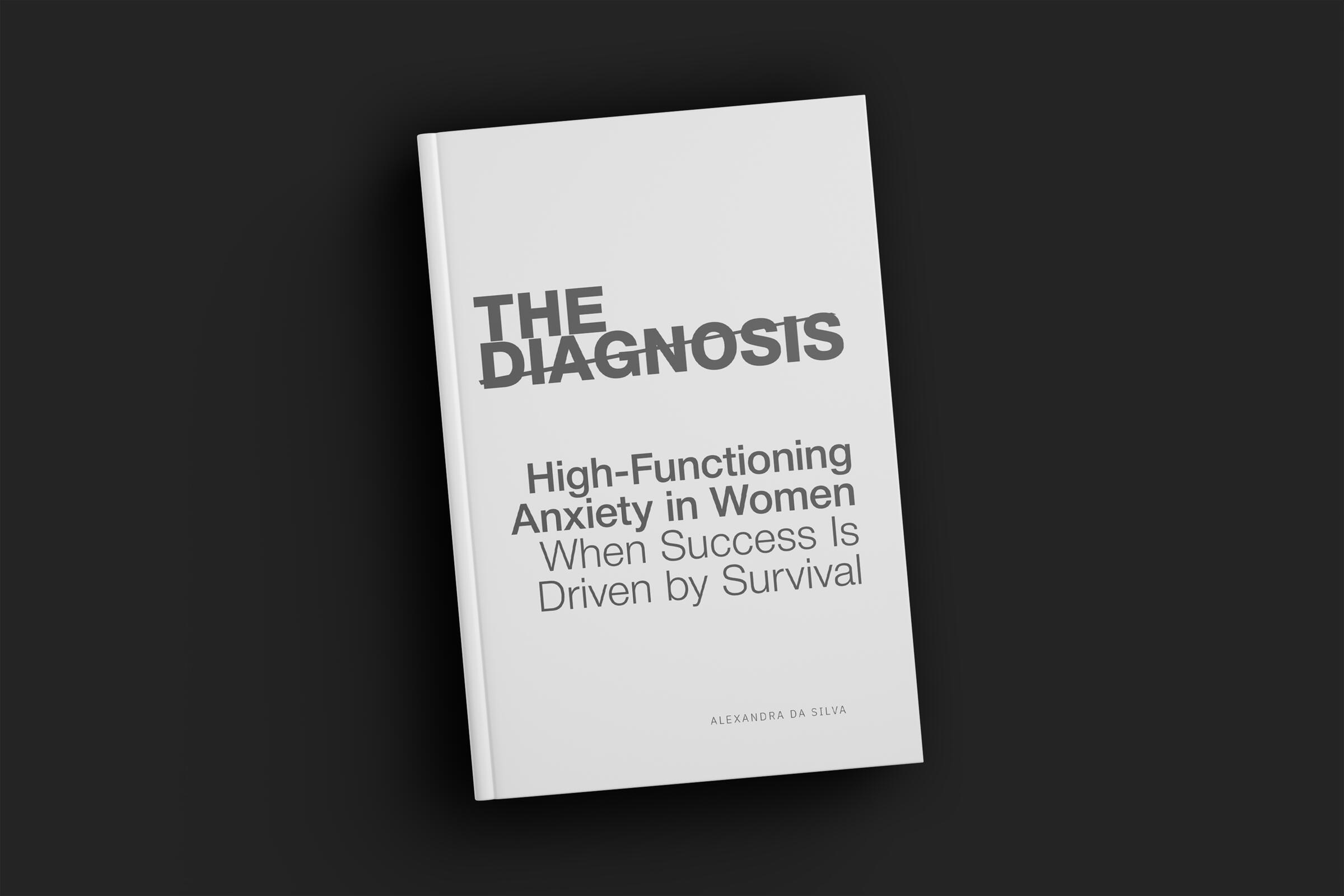
THE
DIAGNOSIS
Anxiety isn’t the problem.
High performance is.
This is not a self-help book.
It does not soothe.
It does not motivate.
The Cost of Holding It Together
You didn’t become anxious because you’re fragile.
You became anxious because you stayed functional under pressure for too long.
What looks like strength is often sustained by internal bracing.
Bracing has a cost.
Constant vigilance
Your system never fully stands down. Even when nothing is wrong, you stay alert—monitoring tone, outcomes, and potential failure. Rest becomes conditional. Silence feels unsafe.
Erosion of self-trust
You stop trusting your ability to respond in real time. Instead, you rely on anticipation, rehearsal, and control. Confidence narrows into preparation.
Narrowed internal range
There is less room for spontaneity, curiosity, or error. You function well, but inside a tightening band of acceptable responses.
False resilience
You call it strength because it works. You keep going. You deliver. But endurance replaces recovery, and stability is maintained through self-override.
A body that stays prepared
Muscles braced. Breath shallow. Attention forward. Even success doesn’t register as safety—only as a brief pause before the next demand.This is not a personal failure.
It is the predictable cost of functioning at a level that never truly rests.
This Book Is Not For You
► If you want reassurance.► If you’re looking for tools to feel better.► If you believe motivation is the problem.► If you expect comfort before clarity.► If you want strategies without disruption.►If you want change without destabilizing the system that made you “successful.”This book does not meet you where you are.
It asks you to see where you’ve adapted too far.
How This Book Works
It separates signal from sensation.
Discomfort is treated as data—not instruction.It traces cost, not pathology.
The question is not what’s wrong, but what functioning has required.It reframes strength as capacity.
Endurance keeps systems running. Capacity determines whether they remain livable.It restores choice.
Not control—orientation.It is sequential.
Skipping ahead weakens the effect. The structure matters.
Diagnosis↓Mechanism↓Cost↓Reorientation
Inside the Book
A diagnostic sequence. Each chapter isolates one mechanism, traces its cost, and forces reorientation.
The System Check
The Cost of Composure
Capacity, Not Endurance
Structural Integrity
The False Alarm
The Source Code
Epilogue
The Diagnosis
Stop holding everything together by force.
Decide from clarity.
Alexandra da Silva approaches anxiety not as a disorder, but as a system response.The Diagnosis is not a personal story.
It is a framework for recognizing the systems anxiety has been holding together—
and deciding whether to keep paying the cost.